Showing posts with label strategy. Show all posts

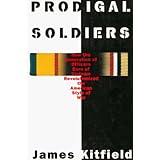
Prodigal Soldiers: How the Generation of Officers Born of Vietnam Revolutionized the American Style of War (An Ausa Institute of Land Warfare Book) Review

Prodigal Soldiers: How the Generation of Officers Born of Vietnam Revolutionized the American Style of War (An Ausa Institute of Land Warfare Book)
Average Reviews:

(More customer reviews)
When you read a book like this and have seen the Army at its best and worst. That and have seen the gradual improvement to where the Army is today, i.e. one of the most trusted institutions and one of the greatest killing machines since the Roman Legions under the early Caesars. I just feel better and safer. That and I want to thank all those who did not turn tail and run away from the wreck of the post Vietnam War Military but stayed and fixed it. God Bless you all!

Click Here to see more reviews about: Prodigal Soldiers: How the Generation of Officers Born of Vietnam Revolutionized the American Style of War (An Ausa Institute of Land Warfare Book)


Buy NowGet 33% OFF

Click here for more information about Prodigal Soldiers: How the Generation of Officers Born of Vietnam Revolutionized the American Style of War (An Ausa Institute of Land Warfare Book)

Read More...

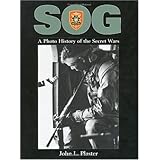
SOG: A Photo History Of The Secret Wars Review

SOG: A Photo History Of The Secret Wars
Average Reviews:

(More customer reviews)
If you thought John's first book was a trip (SOG: The Secret Wars of America's Commandos in Vietnam), this one is mandatory. It is bound to become required reading in every senior war college in every country in the world. It is covert operation best of breed techniques and tactics evolved by both sides over an eight year period. It also puts an evolutionary perspective on the development of those tactics and techniques. How to put em in, pull em out, what to wear, what to take, what to do while you're there, how to do it, and what to whistle while you're doing it. Moves and counter moves. "Hey John, what do we do about the dogs?" Because both books cover the same unit and period, there is a superficial duplication. The first book was primarily a collection of amazing, small, war stories in a historical framework with enough background and profile material to hold anyone's interest. While it had a little of the soldier's bias "from the bottom of the trench", the current book is a lot more objective with more history and substantial tactical and technical detail. Did I mention 700 photographs? Two of the photographs are mine and he actually spelled my name right - Thank you John. About half of the book could (and will) be used as textbook and manual for future recon operations. It also includes a lot of info on the intel/spy/psyops operations and miscellaneous odds & ends we occasionally got mixed up in. The photographs are unreal. Nothing like this has ever been done. It is an instant classic in military circles.
This unit was unique in that it could only have evolved in the way that it did in the time frame and with the people as they existed. Almost all of the SOG commanders were either WWII OSS or jungle guerilla types. The last missions were run in '72 and in another 2 or 3 years, all of the experienced people from SOG left in the military will have retired. The Army in their infinite (and normal) wisdom evidently destroyed the photographs and most of the documentation. The senior brass that is left will not have the foggiest idea of what this is all about. You can recreate the TO&E and fill the slots, but you cannot order people to do what the men in this unit volunteered to do three or four times a day (or night). John does an excellent job describing that esprit de corps and comradery that makes men stand in line, without a thought to personal safety, to leap in harm's way to rescue another. There was a lot of James Bond and John Wayne in this outfit. What does live on exists in the spirit and knowledge imparted to and residing in the various Special Operations Command units. There is still some well deserved bitterness because we often had to fight our own senior military command, State Department, and politicians as well as the North Vietnamese, and any of the above could get you killed. There might be some more bitterness due to the fact that after the US pulled out of South Vietnam, a lot of the natives, both Montagnard and Vietnamese, that we worked and fought with, and loved, probably wound up against a wall or spent at least a decade or more in re-education camps.
It should also be noted that the SOG vets that brought these photos back with them to the States were also in some serious jeopardy because of the TOP SECRET classification on all of SOG's activities. Photographs showing identifiable terrain features in Laos, Cambodia, or North Vietnam would identify the photographer as being in those forbidden or illegal locations. Photos showing actual operations in progress, people preparing for operations, and people returning from operations could create some rather enormous international problems (and maybe a wee bit of political embarrassment) when obviously American led troops were still in NVA uniforms and carrying AK-47's. Real "Spy" spoken here folks. The release or publication of these types of photos could have resulted in prosecution and up to 20 years in a Federal Fun Resort. That was then - this book is now and belongs to all of us with John still in the one-zero seat.
When Hollywood gets around to SOG, they will have to tread lightly. The problem they will have to face will be believability, because the reality was much larger than any fiction and no writer would dare to go this far out on the credibility limb. But then, there are those 700 photos.

Click Here to see more reviews about: SOG: A Photo History Of The Secret Wars

This is the companion photo history to SOG: The Secret Wars of American's Commandos in Vietnam. In 1972 the U.S. military took steps to ensure that such a book could never be printed by destroying all the known photos that existed of the top-secret Studies and Observations Group. But unknown to those in charge, SOG veterans brought back with them hundreds of photographs of SOG in action and kept them secret for more than three decades. More than 700 irreplaceable photos bring to life the stories of SOG legends Larry Thorne, Bob Howard, Dick Meadows, George Sisler, "Q" and others, and documents what really happened deep inside enemy territory: Operation Tailwind, the Son Tay raid, SOG's defense of Khe Sanh, Hatchet Force operations, Bright Light rescues, HALO insertions, string extractions, SOG's darkest programs and much more.

Buy Now

Click here for more information about SOG: A Photo History Of The Secret Wars
Read More...

Dirty Little Secrets of the Vietnam War: Military Information You're Not Supposed to Know Review

Dirty Little Secrets of the Vietnam War: Military Information You're Not Supposed to Know
Average Reviews:

(More customer reviews)
The title of this 375-page book about the Vietnam War is not accurate. There really aren't too many so-called dirty little secrets revealed and most of the material is not controversial, but the book does have a lot of interesting perspectives and factual data re the war. Eschewing the chronological approach Dunnigan and Nofi write a lot of short interesting chapters on everything from a sketch of the pre-U.S. involvement history of conflict in Vietnam and adjoining nations (which still continues as the growing ethnic Vietnamese population continues suppressing and displacing minority groups) to summaries of each aspect of combat (Army, USMC, helicopters, air war, Naval campaigns (perhaps the weakest section), etc.), descriptions of major actions and incidents and overviews of in-country "cultural" issues (drugs, racial relations, popular music, etc.).
One hallmark is lots of statistics on various topics (casualties, military demographics, air craft, weapons used, etc.). Most of these are from official sources and source references - increasing lacking in much today's politicized nonfiction - are provided. Some of the statistics are explained and provide illustrative insights but unfortunately some of the intriguing data are not well explained.
For instance, there's a general impression that surface-to-air missiles (SAMs) were the overwhelming danger to U.S. aircraft and air-to-air combat was a significant aspect of the war. But the authors present statistics which show that only 11% of aircraft lost in combat were lost to SAMs, 4% were lost in air-to-air combat while the remaining 76% were lost to anti-aircraft artillery and various conventional ground-based weapons fire. However, the authors don't clarify that many, if not most, of aircraft losses occurred over South Vietnam where SAMs and MIGs were not available to our adversaries. The 25% rate of US Navy loss to SAMs and MIGs compared with only 12% for USAF/USMC presumably reflects that the Navy operated relatively more over North Vietnam itself from Tonkin Gulf-based carriers while the USAF/USMC operated a larger percentage pf their fixed wing aircraft over the South.
Another fascinating tidbit are the statistics about deserters who accepted amnesty in the mid-1970s - many of whom had gone to Canada - showing they were disproportionately (86%) in the lowest two classifications out of four military intelligence test classifications.
A suggested reading list, multi-page glossary and extensive indexing give what is basically an entertaining read for military history buffs who are not expert on Vietnam a bit of extra value as a reference for further study.
Recommended for Vietnam War, Cold War and general military history buffs and is an excellent book about the Vietnam-era for people not even born before the war ended.
Reviewed on the 30th anniversary of the fall of Saigon. On April 29, 1975, Radio Saigon began playing Bing Crosby's "White Christmas" (an interesting fact NOT mentioned in this book) as a signal to begin Operation Frequent Wind, the evacuation of all American personnel from South Vietnam.


Click Here to see more reviews about: Dirty Little Secrets of the Vietnam War: Military Information You're Not Supposed to Know


Buy NowGet 9% OFF

Click here for more information about Dirty Little Secrets of the Vietnam War: Military Information You're Not Supposed to Know

Read More...

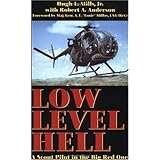
Low Level Hell Review

Low Level Hell
Average Reviews:

(More customer reviews)
Excellent book about some of the dedicated aviators that supported us infantrymen in the Big Red One in Vietnam. As a LRRP in Co.F/52nd Inf. (LRP), 1st Inf. Division in 1968, I always felt that we had tremendous helicopter support. Our LRP company originated as a part of 1st Sq./4th Cavalry, and they regarded us and watched over us from above like brothers. We often called upon the Cobra gunships of D Troop (Air), 1st Sq./4th Cav, call sign: Darkhorse, and they never let us down. Mills book provides us with a cockpit view of their hunter-killer team missions, as opposed to the direct gun-ship support role in which we generally saw Darkhorse. But the 'guns blazing' tactics were obviously the same for the scout ship pilots as they always were for the gunship pilots/co-pilots. Very interesting reading, and the place names brought back many exciting memories of those days over 30 years ago, when we ourselves operated around Phu Loi, Lai Khe , An Loc, the Iron Triangle, Catchers Mitt, and other locations he mentions. Knowing that Darkhorse pilots like Mills always 'had our back', was a reassuring feeling. Could not possibly express enough gratitude to such pilots and crews for the way they supported us. An excellent addition to any Vietnam library.

Click Here to see more reviews about: Low Level Hell

Mills has captured the realities of a select group of aviators who shot craps with death on every mission.--R.S. Maxham, Director of the U.S. Army Aviation Museum

Buy NowGet 15% OFF

Click here for more information about Low Level Hell

Read More...

Snake Pilot: Flying the Cobra Attack Helicopter in Vietnam Review

Snake Pilot: Flying the Cobra Attack Helicopter in Vietnam
Average Reviews:

(More customer reviews)
Evidently, the publisher's printing press has a maximum number of pages that it can print in a book of this size. Regrettably, Randy was forced to cut major portions from the original manuscript that detailed more than the actions of a cobra pilot.
In spite of this, Randy has completed the impossible task: He has documented the details correctly, and has also caught the tone, captured the frustration, and has put into writing what it was like to be a very young cobra pilot in Charlie Troop, 1/9 Cav.
This is personal. This is a personal account; with all of the personal feelings and interactions that one is expected to have in combat. He has not blown his personal, the troop's, nor the 9th Cav's exploits out-of-proportion (like another author has), and has tried his best to describe the unit as it was.... a great Troop in the highly recognized 9th Cavalry, "doing it all like it was supposed to be done" in Nam. As such, the good and the not so good are both reported as fairly as any human being in combat can. When you are done reading his excellent book, you will no doubt have assimilated his personal feelings for what it was like to be a "Snake Pilot."
Grover Wright
Charlie Troop, 1/9 Cav
1969-1970
Snake Pilot

Click Here to see more reviews about: Snake Pilot: Flying the Cobra Attack Helicopter in Vietnam

Based on audiotapes he recorded during the war and sent home to his family, Randy Zahn's Snake Pilot recounts his experiences flying AH-1 Cobra helicopters during the Vietnam War. First deployed in Vietnam in 1967 and loaded with a formidable arsenal of weaponry, the Cobra was the first helicopter designed from inception as an attack aircraft. It dramatically changed the nature of the war in Vietnam by offering the Army, for the first time, its own powerful and highly accurate weapons platform for close-air-support missions. Randy Zahn arrived in Vietnam shortly before the 1970 U.S. invasion of Cambodia, one of the most impressive demonstrations by the Cobra in the war. He describes his stunning transformation from a naive, middle-class teenager from southern California to a hardened killer during his tour in Vietnam. Unlike the pilots who flew the fast-moving strike jets, Zahn experienced the war 'up close and personal," witnessing the grisly effects of the Cobra's firepower on enemy soldiers. The author does not glorify killing but rather explains in sharp relief the kaleidoscope of emotions associated with combat: fear, revenge, hate, remorse, pity, and even ecstasy. He captures many of the ironies and nuances inherent in Vietnam, especially during the final years of the conflict. Zahn displays a sensitivity rarely found in memoirs written by battle-hardened warriors. This human element, combined with the vast amount of archival research and interviews with members of his former unit, ensures that Snake Pilot will become the definitive account of the role helicopters played in Vietnam.

Buy NowGet 32% OFF

Click here for more information about Snake Pilot: Flying the Cobra Attack Helicopter in Vietnam

Read More...